Author: Felipe — licensed plumber and residential plumbing contractor with 15+ years of hands-on experience repairing toilets and drainage systems.
Your toilet flushes, but the bowl doesn’t clear. Water swirls weakly, paper stays behind, or you have to flush twice to finish the job. That’s one of the most common service calls I get. In my years of working on homes, I’ve seen this problem dozens of times, and in most cases the fix is simple — usually a clogged rim jet, low water level, or a worn-out flapper.
The key is to troubleshoot from the easiest fix to the more involved ones. This guide walks you through the exact causes of a toilet not flushing all the way and shows you how to fix each one safely, quickly, and without replacing the entire toilet unless it’s truly necessary.
Quick Answer
If your toilet isn’t flushing all the way, the most common causes are a partial clog, low water level in the tank, or a worn flapper. Start by plunging the toilet, then check the tank water level and clean the rim holes under the bowl. Most homeowners can fix this in under 30 minutes.
Tools & Materials You’ll Need
Tools needed
- Standard cup plunger — $8–$15
- Toilet auger (closet auger) — $25–$60
- Flathead screwdriver — $5–$10
- Adjustable wrench — $10–$20
- Rubber gloves — $5–$10
- Small mirror (for inspecting rim holes) — $5–$15
- Old toothbrush or small wire brush — $2–$6
Skill level required: Beginner to intermediate DIY
Materials needed
- Replacement flapper — $6–$15
- White vinegar — $3–$5 per gallon
- Toilet tank cleaner or descaler — $8–$15
- Fill valve replacement kit — $15–$30 (if needed)
Start Here: The 5 Most Common Reasons a Toilet Won’t Flush Completely
In my experience fixing toilets across multiple houses and apartment units, these are the causes I see most often:
- Partial clog in the trap or drain line
- Low water level in the tank
- Worn or misaligned flapper
- Mineral buildup blocking rim holes
- Weak or failing fill valve
- Sewer vent blockage (less common)
Always start with the simplest fix. Don’t replace parts until you confirm the problem.
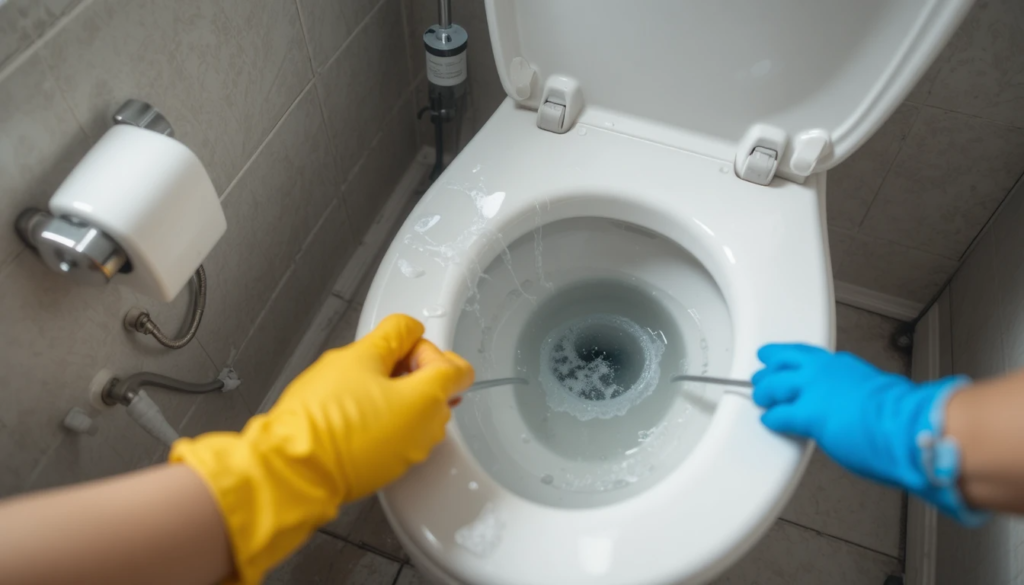
1) Check for a Partial Clog (Most Common Cause)
If the toilet flushes slowly or leaves waste behind, a partial clog is the first thing to suspect. It restricts water flow but doesn’t block it completely.
I’ve seen this problem dozens of times in homes where too much toilet paper or “flushable” wipes were used.
How to fix it
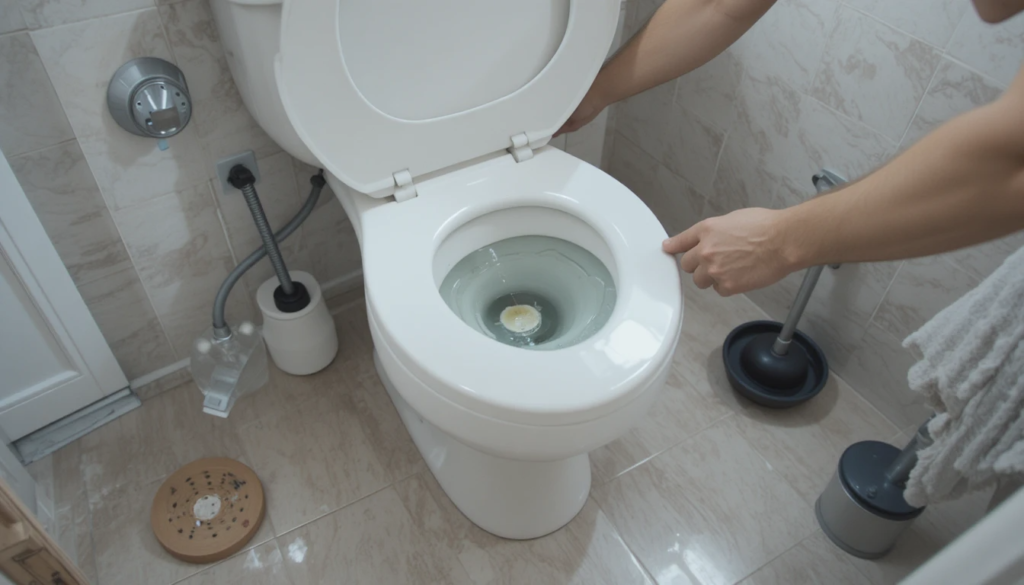
- Place the plunger over the drain opening in the bowl.
- Make sure the rubber cup fully seals the hole.
- Push down gently, then pull up quickly.
- Repeat 10–15 times.
- Flush the toilet and observe the water flow.
If plunging doesn’t fix it, use a toilet auger.
When to use a toilet auger
Use one if:
- The toilet flushes weakly
- Water drains slowly
- You suspect something stuck deeper in the trap
2) Check the Water Level in the Tank
A toilet needs enough water to create proper flushing force. If the tank water level is too low, the flush will be weak.
This is one of the easiest fixes — and one homeowners often overlook.
What the correct level should be
The water should sit:
About 1 inch below the overflow tube
If it’s lower than that, your flush will be weak.
How to adjust the water level
- Remove the tank lid.
- Locate the fill valve (the tall component on the left side).
- Find the adjustment screw or float clip.
- Turn the screw clockwise to raise the water level.
- Flush and recheck.
3) Inspect the Flapper (A Very Common Failure)
The flapper controls how much water enters the bowl during a flush. If it closes too quickly, the toilet won’t flush completely.
After fixing this in multiple houses, I can tell you this part wears out every 3–5 years on average.
Signs the flapper is failing
- Toilet requires multiple flushes
- Flush handle must be held down
- Water leaks slowly into the bowl
- Rubber looks warped or cracked
How to replace the flapper
- Turn off the water supply valve.
- Flush the toilet to empty the tank.
- Disconnect the flapper chain.
- Remove the old flapper from the overflow tube.
- Install the new flapper in the same position.
- Reconnect the chain with slight slack.
- Turn water back on and test.
Time required: 10–15 minutes
4) Clean the Rim Jets Under the Toilet Bowl
Those small holes under the rim — called rim jets — direct water into the bowl during a flush. Over time, mineral deposits can clog them.
This is extremely common in areas with hard water.
Signs of clogged rim jets
- Weak swirling action
- Uneven water flow
- Slow flushing despite a full tank
How to clean them
- Look under the rim using a flashlight and mirror.
- Scrub each hole with a toothbrush or wire brush.
- Pour white vinegar into the overflow tube.
- Let it sit for 1–2 hours.
- Flush the toilet.
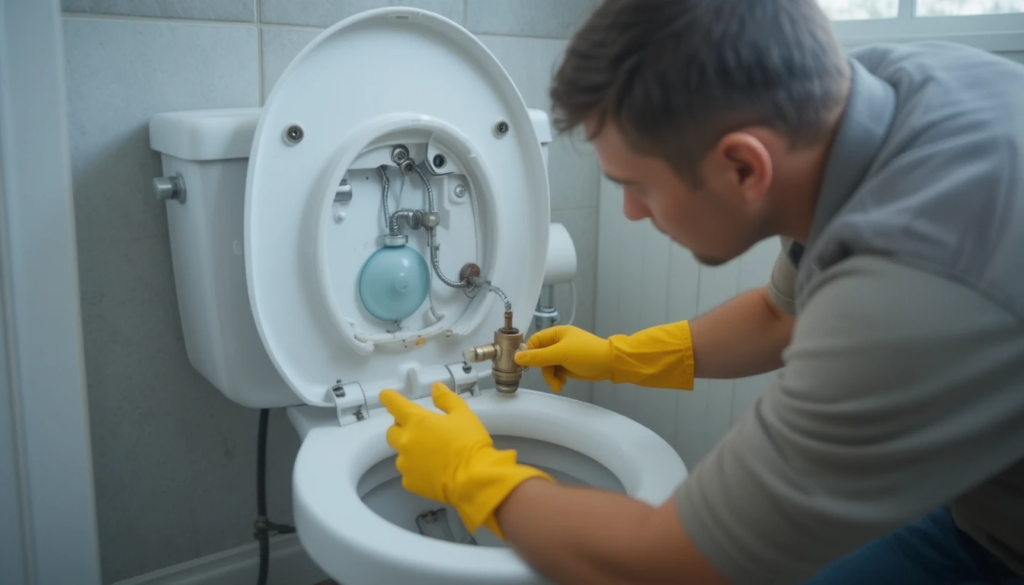
5) Check the Fill Valve for Weak Flow
The fill valve controls how fast water enters the tank. If it’s worn or partially blocked, the tank won’t refill properly.
In my years of service calls, this usually happens after:
- 5–10 years of use
- Sediment buildup
- Hard water exposure
How to test the fill valve
- Flush the toilet.
- Watch how quickly the tank refills.
- Listen for weak or sputtering water flow.
If refill takes longer than:
60–90 seconds
The valve likely needs replacement.
6) Check the Toilet Chain Length
A chain that’s too short or too long prevents the flapper from opening fully.
This is a small issue that causes big flushing problems.
Correct chain setup
The chain should have:
About ½ inch of slack
How to adjust it
- Remove the tank lid.
- Locate the chain connected to the flush handle.
- Move the hook to a different link.
- Test the flush.
7) When the Problem Is in the Drain Line or Vent
If you’ve tried everything above and the toilet still won’t flush properly, the issue may be deeper in the plumbing system.
Possible causes include:
- Blocked sewer vent
- Main drain obstruction
- Sewer line damage
Warning signs
- Multiple drains are slow
- Gurgling sounds
- Sewer odors
- Water backing up
At this point, you’ll likely need professional equipment such as:
- Drain camera
- Power auger
- Hydro jet
[VERIFY: Local plumbing codes may require licensed professionals for sewer work.]
Cost Estimate: DIY vs Professional Repair
| Repair Type | DIY Cost | Professional Cost |
|---|---|---|
| Plunger fix | $10–$15 | $100–$150 |
| Flapper replacement | $6–$15 | $120–$200 |
| Fill valve replacement | $15–$30 | $150–$250 |
| Toilet auger clearing | $25–$60 | $150–$300 |
| Drain line clearing | Not recommended | $200–$600 |
Factors affecting cost:
- Location and labor rates
- Severity of blockage
- Age of plumbing
- Accessibility of drain line
[VERIFY: check current US pricing]
When You Should Replace the Toilet Instead
Sometimes repair isn’t worth it.
Consider replacement if:
- The toilet is 15–20 years old
- Cracks are visible
- Flush performance is consistently weak
- Repairs exceed $300
Modern toilets use:
1.28 gallons per flush (GPF)
Older models use up to 3.5–5 gallons
That difference can reduce water bills significantly.
Practical Summary
- Most flushing problems come from a partial clog, low tank water, or worn flapper
- Always start with the plunger before replacing parts
- Tank water should sit 1 inch below the overflow tube
- Clean rim jets if the flush looks weak but the tank is full
- Call a plumber if multiple drains are slow or sewage backs up
Frequently Asked Questions
Why does my toilet flush but not remove waste?
This usually means there’s a partial clog or not enough water entering the bowl. Start by plunging the toilet and checking the tank water level. These two fixes solve most cases.
Why do I have to hold the handle down to flush?
That typically indicates a worn or poorly adjusted flapper. The flapper is closing too quickly, preventing enough water from entering the bowl. Replacing it usually fixes the problem in minutes.
Why is my toilet flushing weakly all of a sudden?
Sudden weak flushing is often caused by a blockage or mineral buildup in the rim jets. It can also happen if the fill valve stops delivering enough water. Check these areas first.
Can low water pressure cause a toilet not to flush completely?
Not usually. Toilets rely on stored tank water, not direct pressure. However, extremely low pressure can slow tank refilling, which may reduce flushing performance.
How often should toilet parts be replaced?
Most internal parts last:
- Flapper: 3–5 years
- Fill valve: 5–10 years
- Flush handle: 5–10 years
Hard water can shorten these lifespans.
Why does my toilet flush twice to clear the bowl?
That’s a classic sign of:
- Low tank water level
- Worn flapper
- Partial clog
Fixing one of these typically restores normal flushing.
Is it safe to use chemical drain cleaners in a toilet?
No. Chemical cleaners can damage the wax ring, pipes, and porcelain glaze. Use a plunger or toilet auger instead.
Conclusion
Here’s the thing: a toilet that won’t flush all the way is usually a small mechanical issue, not a major plumbing failure. In most homes I’ve worked on, the fix took less than 20 minutes and cost under $20.
Start with the plunger, check the tank water level, and inspect the flapper before doing anything else. Those three steps solve the majority of cases — and they’re safe for any beginner to handle.