Author: Felipe — Licensed plumber with 15 years of residential plumbing experience
Your toilet won’t flush all the way, the bowl doesn’t clear, or the handle feels weak. Maybe the water swirls but nothing goes down. I’ve seen this problem dozens of times in homes of every age — from brand-new builds to 40-year-old houses with aging plumbing. When a toilet is not flushing correctly, the cause is usually simple: low water level, a worn flapper, or a partial clog. But sometimes it’s a venting or drain line issue that needs more work.
This guide walks you through the most common causes — starting with the easiest fixes you can do in five minutes and moving toward the more complex repairs if the problem keeps coming back.
Quick Answer
If your toilet is not flushing correctly, first check the water level in the tank, the flapper, and whether there’s a partial clog in the trap. Most flushing problems are caused by low tank water or a worn flapper, both of which can be fixed in under 15 minutes with basic tools.
Tools & Materials You’ll Need Before Starting
Tools needed
- Rubber gloves — $5–$10
- Standard plunger (flange type) — $10–$25
- Toilet auger (closet auger) — $25–$60
- Flathead screwdriver — $5–$10
- Adjustable wrench — $10–$20
- Flashlight — $10–$20
- Bucket — $5–$10
Skill level: Beginner to intermediate
Typical time: 5 minutes to 1 hour depending on the cause
Materials needed
- Replacement flapper — $6–$15
- Fill valve kit — $12–$25
- Toilet cleaner or descaler — $8–$15
- Hot water (not boiling) — Free
- Dish soap — Free to $5
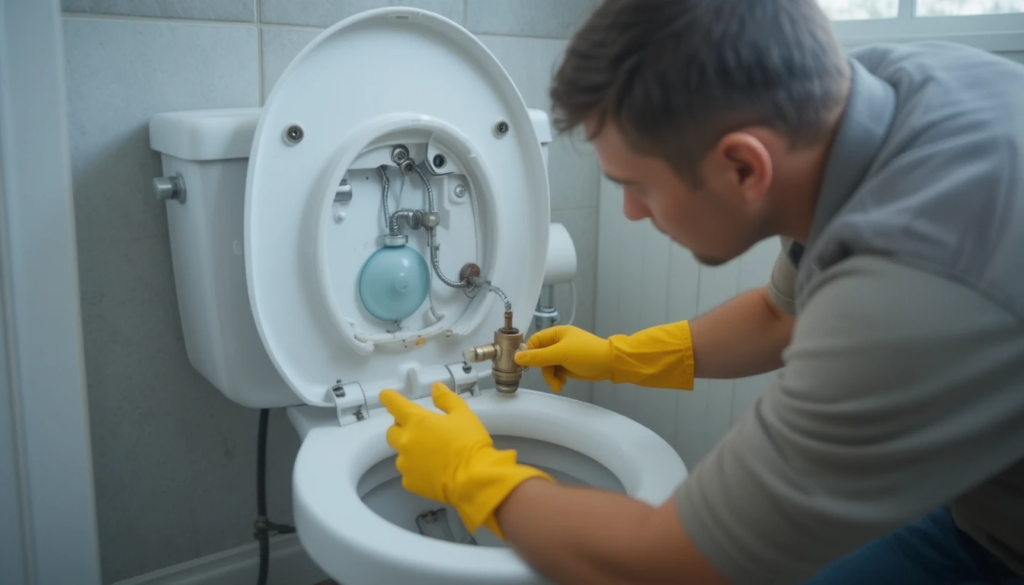
Step 1: Check the Water Level in the Tank (Most Common Cause)
In my years of working on homes, low tank water is the number one reason a toilet doesn’t flush properly. Toilets rely on gravity and volume — if the tank doesn’t hold enough water, the flush won’t have enough force.
What to look for
Open the tank lid and check the water line.
- Water should sit about 1 inch below the overflow tube
- If it’s lower than that, the flush will be weak
- If it’s very low, the bowl may not empty at all
How to fix it
- Remove the tank lid carefully and set it on a flat surface.
- Locate the fill valve (usually on the left side).
- Find the adjustment screw or float clip.
- Turn the screw clockwise or raise the float slightly.
- Flush the toilet and watch the refill level.
- Adjust again until water reaches the proper height.
Time required: 2–5 minutes
Cost: Free
Step 2: Inspect the Flapper (Second Most Common Failure)
I’ve replaced thousands of flappers. They’re cheap, they wear out, and when they do, flushing power drops fast.
A worn flapper may:
- Close too early
- Leak water slowly into the bowl
- Prevent a full flush
Signs the flapper is bad
- You need to hold the handle down to flush
- The toilet runs intermittently
- The flush feels weak or incomplete
How to replace the flapper
- Turn off the water supply valve behind the toilet.
- Flush the toilet to empty the tank.
- Disconnect the chain from the flush lever.
- Remove the old flapper from the overflow tube.
- Install the new flapper in the same position.
- Reconnect the chain with slight slack (about ½ inch).
- Turn the water back on and test.
Time required: 10–15 minutes
Cost: $6–$15
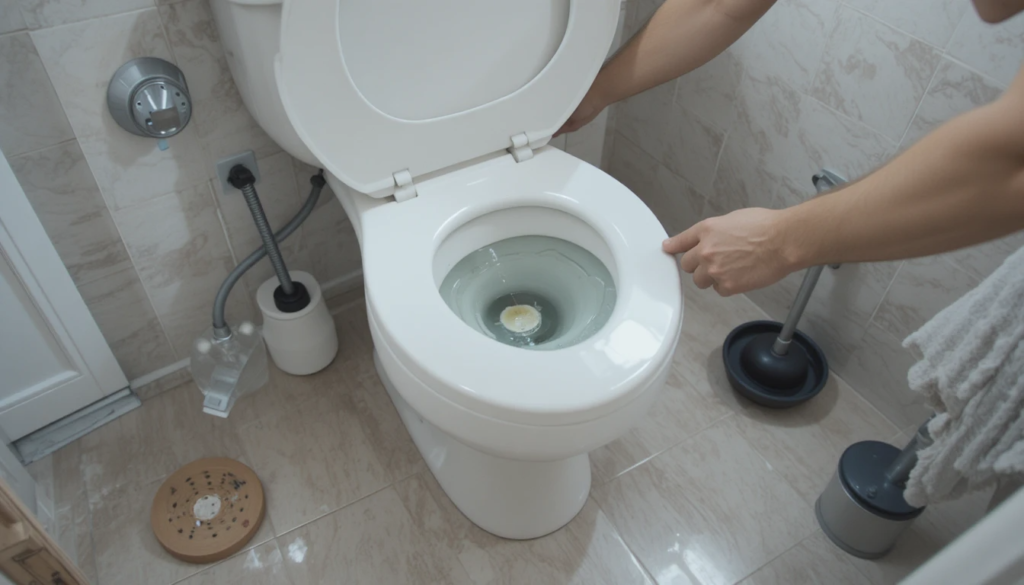
Step 3: Use a Proper Plunger to Clear a Partial Clog
Here’s the thing — many flushing problems are not full clogs. They’re partial blockages that slow water flow.
I’ve seen this in homes where:
- Too much toilet paper is used
- “Flushable” wipes are flushed
- Mineral buildup narrows the trap
Use the right plunger
You need a flange plunger, not a flat sink plunger.
How to plunge correctly
- Make sure the bowl has enough water to cover the plunger.
- Place the plunger firmly over the drain opening.
- Push down slowly to create a seal.
- Pull up quickly.
- Repeat 10–15 times.
- Flush and check performance.
Important: Don’t use chemical drain cleaners in toilets. They can damage seals and porcelain.
Time required: 5–10 minutes
Cost: $10–$25
Step 4: Check for Clogged Rim Jets or Siphon Jet
After fixing this in multiple houses with hard water, I’ve learned mineral buildup can quietly reduce flushing power.
Toilets have small holes under the rim called rim jets. If they clog, water can’t flow fast enough.
Symptoms
- Weak flush despite normal tank water level
- Uneven water flow around the rim
- Slow bowl clearing
How to clean rim jets
- Lift the toilet seat and look under the rim.
- Use a flashlight to inspect the holes.
- Insert a small wire or paperclip into each hole.
- Pour a descaling cleaner into the overflow tube.
- Wait 30–60 minutes.
- Flush several times.
Time required: 30–60 minutes
Cost: $8–$15
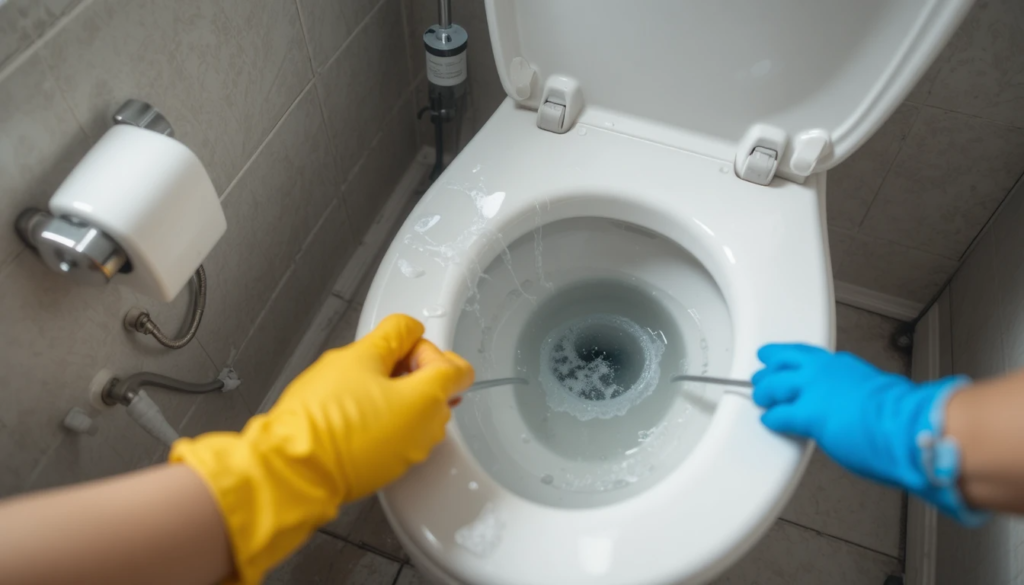
Step 5: Use a Toilet Auger if the Problem Keeps Returning
If plunging helps temporarily but the problem comes back, there’s likely a deeper blockage.
A toilet auger reaches farther into the trap than a plunger.
I’ve seen this fix flushing problems caused by:
- Toys
- Paper buildup
- Hygiene products
- Small foreign objects
How to use a toilet auger
- Insert the auger into the bowl opening.
- Push gently until resistance is felt.
- Turn the handle clockwise.
- Continue feeding the cable slowly.
- Pull the auger back out.
- Flush to test.
Warning: Never force the auger. You can crack the porcelain.
Time required: 10–20 minutes
Cost: $25–$60
Step 6: Check the Vent Stack (Less Common but Serious)
If multiple fixtures drain slowly — toilet, sink, and tub — the issue may be venting, not the toilet itself.
Plumbing vents allow air into the system. Without air, water can’t move properly.
Signs of a vent problem
- Gurgling sounds in pipes
- Slow flushing across multiple bathrooms
- Sewer smell indoors
- Water backing up elsewhere
What causes vent blockages
- Leaves
- Bird nests
- Snow or ice
- Debris
What to do
- Inspect the vent pipe on the roof.
- Look for visible blockage.
- Use a garden hose to flush debris.
Safety note: Roof work carries fall risk.
If you’re not comfortable, call a professional.
Professional help recommended
Step 7: Consider a Sewer Line or Drain Line Issue
If your toilet suddenly flushes poorly after years of normal use, the issue may be deeper in the system.
I’ve diagnosed this many times in older homes where:
- Tree roots invade pipes
- Pipes sag (called a belly)
- Heavy buildup restricts flow
Warning signs
- Frequent clogs
- Slow drains throughout the house
- Sewage smell
- Water backing up into tubs or showers
This requires specialized equipment.
Call a licensed plumber if you see these symptoms.
[VERIFY: local sewer inspection requirements]
Cost Estimate: DIY vs Professional Repair
| Repair Type | DIY Cost | Professional Cost |
|---|---|---|
| Adjust water level | Free | $75–$150 |
| Replace flapper | $6–$15 | $90–$180 |
| Replace fill valve | $12–$25 | $120–$250 |
| Clear clog (auger) | $25–$60 | $150–$350 |
| Drain or sewer inspection | Not DIY | $250–$600 |
| Toilet replacement | $150–$350 | $400–$900 |
Factors affecting price
- Region and labor rates
- Severity of blockage
- Accessibility of plumbing
- Toilet model and brand
[VERIFY: check current US pricing]
When to Replace the Toilet Instead of Repairing It
Sometimes repairs aren’t worth it.
Consider replacement if:
- The toilet is 15–20 years old
- It clogs frequently
- The flush is weak even after repairs
- Cracks are visible in the porcelain
- Water usage exceeds 1.6 gallons per flush
Modern toilets use improved siphon design and flush stronger with less water.
Practical Summary: Fix a Toilet That Won’t Flush Properly
- Check tank water level first — it’s the fastest and most common fix
- Replace the flapper if the flush feels weak or incomplete
- Use a flange plunger to clear partial clogs
- Clean rim jets if water flow looks uneven
- Call a plumber if multiple drains are slow or the problem keeps returning
Frequently Asked Questions
Why does my toilet flush weakly but not clog?
This usually means the tank isn’t releasing enough water or the rim jets are partially blocked. Low water level and worn flappers are the most common causes. Start by checking those before assuming a clog.
Why do I have to hold the handle down to flush?
The flapper is likely closing too soon. This prevents the full tank from emptying into the bowl. Replacing the flapper typically fixes the issue in under 15 minutes.
Can a clogged vent cause a toilet not to flush correctly?
Yes. Without proper air flow, the drain system can’t move water efficiently. You’ll usually notice gurgling sounds or slow drains in other fixtures at the same time.
Why does my toilet flush slowly but eventually empties?
That’s a classic sign of a partial blockage or mineral buildup. The water can pass through, but not fast enough for a strong flush. A plunger or auger usually resolves it.
Is it safe to pour hot water into the toilet to unclog it?
Yes — as long as the water is hot, not boiling. Boiling water can crack porcelain. Hot water combined with dish soap can help dissolve minor clogs.
How long should a toilet flush last?
A normal flush cycle lasts 3 to 5 seconds. If it stops early or feels weak, the tank components likely need adjustment or replacement.
What if the toilet works sometimes but not always?
Intermittent flushing problems usually indicate a worn flapper, inconsistent fill valve, or partial clog. These parts wear out gradually and should be inspected first.
Conclusion
Start simple. In most homes I’ve worked on, the fix took less than 15 minutes and cost under $20. Don’t jump straight to major repairs — check the water level, flapper, and for a partial clog first. If the problem keeps returning or affects multiple fixtures, that’s your signal to investigate the drain or vent system before it turns into a bigger plumbing issue.