Author: Felipe — Licensed plumber with 15 years of hands-on residential plumbing experience
A toilet that suddenly loses flushing power is more than annoying. Waste lingers, you flush twice, and the bowl barely clears. I’ve seen this problem dozens of times in homes of every age — from brand-new builds to 40-year-old houses. In most cases, the issue isn’t the toilet itself but something restricting water flow or pressure inside the tank or drain line.
The good news: a toilet not flushing strong is usually fixable in under 30 minutes with basic tools. Only a small percentage require parts replacement or professional service. Below, you’ll find the exact troubleshooting steps I use on service calls, starting with the simplest fixes and moving toward the more involved ones.
Quick Answer: Why Your Toilet Isn’t Flushing Strong
A weak toilet flush is usually caused by low water level in the tank, clogged rim jets, a partially blocked drain, or a worn flapper that closes too soon. Start by checking the tank water level, then clean the rim holes and test for a partial clog. Most fixes cost under $20 and take less than an hour.
Tools and Materials You’ll Need
Tools needed
- Rubber gloves — $5–$10
- Flathead screwdriver — $5–$12
- Toilet plunger (flange type) — $10–$20
- Small mirror — $5–$10
- Wire hanger or small brush — $0–$8
- Adjustable wrench — $10–$18
- Bucket — $5–$10
Skill level: Beginner to intermediate
Estimated time: 15 minutes to 1 hour
Materials needed
- White vinegar — $3–$5 per gallon
- Replacement flapper — $6–$15
- Fill valve (if needed) — $12–$25
- Toilet auger (optional) — $25–$45
Step 1: Check the Tank Water Level (Most Common Cause)
In my years of working on homes, low tank water level is the number one reason toilets lose flushing power. The flush depends on gravity — less water equals less force.
Here’s how to check it.
How to adjust the water level
- Remove the tank lid and set it somewhere safe.
- Look for the water line mark inside the tank — usually about 1 inch below the top of the overflow tube.
- If the water level sits below that line, locate the fill valve adjustment screw or float clip.
- Turn the screw clockwise or slide the clip upward to raise the water level.
- Flush the toilet and watch the refill cycle.
If the tank doesn’t refill fully after adjustment, the fill valve may be failing.
What this fix solves:
- Weak flush
- Incomplete bowl clearing
- Multiple flushes required
Step 2: Make Sure the Flapper Opens Fully
A worn or misaligned flapper valve can close too early, cutting off water mid-flush. I’ve replaced hundreds of these — it’s one of the fastest plumbing repairs you can do.
Signs the flapper is the problem
- Flush starts strong but fades quickly
- Handle must be held down to flush properly
- Toilet runs intermittently
How to fix it
- Turn off the water supply valve behind the toilet.
- Flush to empty most of the tank.
- Disconnect the flapper chain from the handle arm.
- Remove the old flapper from the overflow tube.
- Install a new flapper and reconnect the chain with slight slack (about ½ inch).
Typical repair time: 10 minutes
Cost: Under $15
After fixing this in multiple houses, I can tell you — if the toilet is more than 5–7 years old, replacing the flapper is often worth doing even if it’s not completely failed yet.
Step 3: Clean the Rim Jets and Siphon Hole
Mineral buildup is a hidden cause of weak flushing, especially in areas with hard water. The small holes under the rim — called rim jets — direct water into the bowl to create the siphon effect.
When they clog, the flush loses power.
How to check for clogged rim holes
Look under the rim using a mirror and flashlight. You may see:
- White or green mineral deposits
- Reduced water flow from certain holes
- Uneven flushing pattern
How to clean them safely
- Pour 1 gallon of white vinegar into the overflow tube inside the tank.
- Let it sit for at least 1 hour (overnight works better).
- Use a small brush or wire to gently clear each rim hole.
- Flush several times to rinse the system.
Why vinegar works:
It dissolves calcium and mineral buildup without damaging rubber parts.
I’ve seen toilets regain full flushing power after this simple cleaning — especially in homes with older plumbing.
Step 4: Test for a Partial Clog in the Drain
A toilet doesn’t have to be fully blocked to lose flushing strength. A partial clog slows water movement and weakens the siphon action.
Common causes include:
- Excess toilet paper
- Small objects
- Buildup inside the trap
- Early-stage drain blockage
How to clear a partial clog
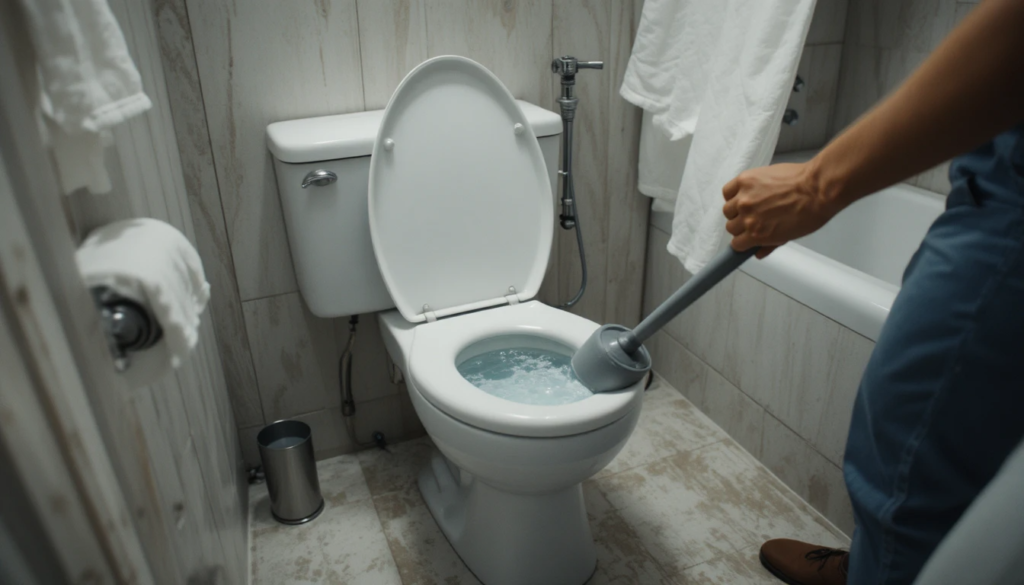
- Place a flange plunger firmly into the bowl opening.
- Push down slowly to create a seal.
- Pump the plunger 10–15 times with steady pressure.
- Flush and observe performance.
If plunging doesn’t help, move to a toilet auger.
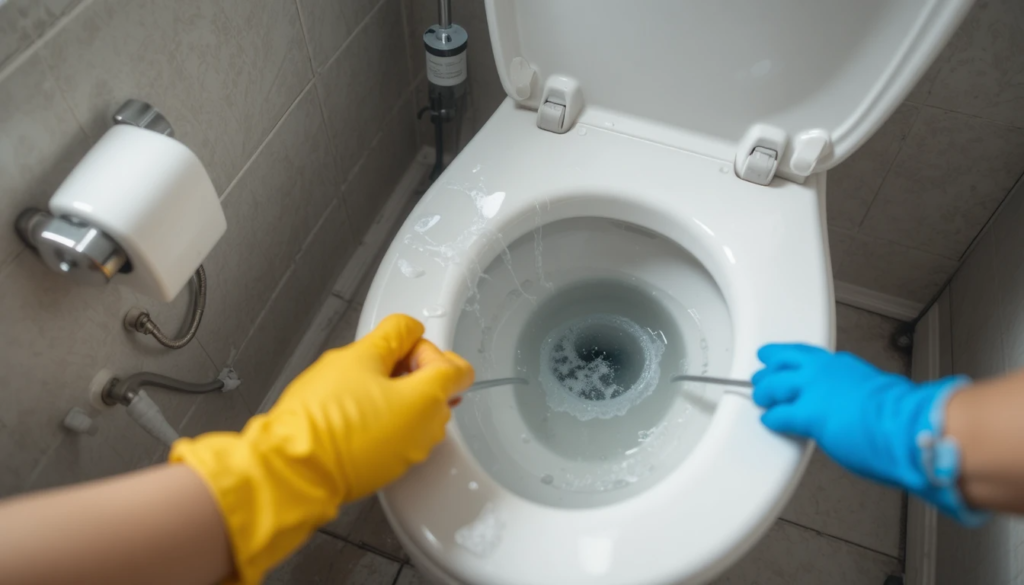
Using a toilet auger
- Insert the auger into the bowl outlet.
- Rotate the handle clockwise.
- Push gently until resistance clears.
- Remove and flush.
Important warning:
Never use a standard drain snake — it can crack porcelain.
Step 5: Check the Fill Valve for Slow Refill
A failing fill valve reduces water volume entering the tank, which directly weakens the flush.
Symptoms of a bad fill valve
- Tank refills slowly
- Weak or inconsistent flush
- Hissing or sputtering sounds
- Water level drops over time
Replacement steps
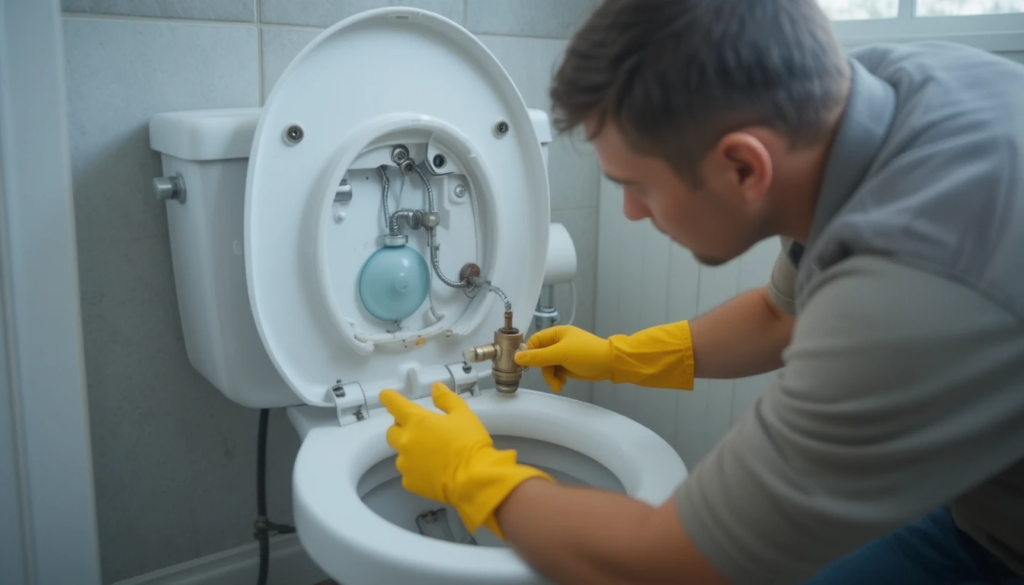
- Shut off the water supply.
- Flush the toilet to empty the tank.
- Disconnect the water supply line using an adjustable wrench.
- Remove the old fill valve.
- Install the new valve according to manufacturer instructions.
- Turn the water back on and test.
Typical repair time: 20–30 minutes
Difficulty: Beginner-friendly
Most modern fill valves are universal and adjustable.
Step 6: Inspect the Toilet Trap or Main Drain Line
If everything inside the tank looks correct and the flush is still weak, the issue may be deeper in the plumbing system.
I’ve seen this happen in homes where:
- The drain pipe is partially blocked
- The vent pipe is restricted
- The sewer line has buildup
Warning signs of a larger plumbing issue
- Multiple fixtures draining slowly
- Gurgling sounds in pipes
- Sewer smell from drains
- Water backing up in the tub or sink
When to call a professional
Contact a plumber if:
- Augering doesn’t improve flushing
- The problem affects multiple fixtures
- You suspect a sewer line blockage
- The toilet frequently clogs
[VERIFY: local plumbing code requirements for drain inspection]
Cost Estimate: Fixing a Weak Toilet Flush
DIY repair costs
- Adjust water level: $0
- Replace flapper: $6–$15
- Clean rim jets: $3–$5
- Replace fill valve: $12–$25
- Buy toilet auger: $25–$45
Professional repair costs
- Basic service call: $90–$150
- Toilet repair visit: $120–$250
- Drain cleaning service: $150–$350
- Sewer line inspection with camera: $250–$500
Factors affecting price
- Region and labor rates
- Severity of blockage
- Age of plumbing system
- Accessibility of pipes
[VERIFY: check current US pricing]
When It’s Time to Replace the Toilet
Sometimes the toilet itself is the problem — especially older models made before modern efficiency standards.
Consider replacement if:
- The toilet is 20+ years old
- Cracks are visible in the bowl or tank
- Flushing power has always been weak
- Repairs exceed $300
Modern 1.28 GPF (gallons per flush) toilets often outperform older units while using less water.
After installing newer models in dozens of homes, I’ve consistently seen stronger flushing and fewer clogs.
Practical Summary: Fix Weak Toilet Flush Fast
- Check the tank water level first — it’s the most common cause.
- Replace the flapper if the flush stops too soon.
- Clean rim jets with vinegar to restore full water flow.
- Use a plunger or auger to clear partial clogs.
- Call a plumber if multiple drains are slow or the problem keeps returning.
Frequently Asked Questions
Why does my toilet flush weak but not clog?
A weak flush without clogging usually means low tank water level, mineral buildup in rim holes, or a worn flapper. These issues reduce water force but don’t fully block the drain. Start by checking the tank components.
Can low water pressure cause a weak toilet flush?
Yes, but it’s less common. Toilets rely on gravity from the tank, not supply pressure. Low pressure mainly affects how fast the tank refills, not the strength of the flush.
How do I know if my toilet is partially clogged?
Signs include slow draining, rising water levels during flushing, or needing multiple flushes to clear waste. A plunger or toilet auger usually resolves the issue quickly.
Why does my toilet only flush strong when I hold the handle down?
This almost always indicates a flapper problem. The flapper is closing too soon and stopping water flow before the flush completes.
How often should I clean toilet rim jets?
Every 6 to 12 months in areas with hard water. Regular cleaning prevents mineral buildup and maintains flushing performance.
Is it worth repairing an old toilet?
Usually yes — if the repair costs less than $150. But if the toilet is over 20 years old or requires repeated repairs, replacement is often the better long-term investment.
Conclusion
Here’s the thing most homeowners don’t realize: flushing power comes down to water volume and flow speed. If either one drops — even slightly — performance suffers. Start with the simple checks inside the tank before assuming the worst. In many cases, a $10 part or a quick cleaning restores full function. If the problem keeps returning after multiple fixes, that’s your signal to look deeper into the drain system or consider upgrading the toilet.