Author: Felipe — licensed plumber with 15 years of hands-on residential plumbing experience
You press the handle, the water swirls weakly, and the bowl barely clears. Sometimes it takes two or three flushes. That’s frustrating — and it usually means something simple isn’t working the way it should. In my years of working on homes, a toilet that’s not flushing well is one of the most common service calls, and in most cases, the fix takes less than 20 minutes.
If you’re wondering why is my toilet not flushing well, the cause is typically a partial clog, low water level in the tank, or blocked rim jets. The good news is you can diagnose and fix most of these problems yourself with basic tools. This guide walks you through the causes and solutions from easiest to more involved repairs.
Quick Answer
A toilet usually doesn’t flush well because of a partial clog, low tank water level, or mineral buildup blocking the rim jets. Start by plunging the toilet, then check the tank water level and clean the rim holes under the bowl rim. These fixes solve most weak flush problems.
Tools & Materials You’ll Need Before Starting
Tools needed
- Plunger (flange-style) — $10–$20
- Toilet brush — $5–$10
- Adjustable wrench — $10–$20
- Flathead screwdriver — $5–$10
- Rubber gloves — $5–$10
- Flashlight — $10–$20
- Small mirror (optional for inspecting rim holes) — $5–$10
Skill level: Beginner to intermediate
Estimated time: 10 minutes to 1 hour
Materials needed
- White vinegar — $3–$6
- Baking soda — $2–$5
- Toilet auger (closet auger) — $25–$50
- Replacement flapper valve (if needed) — $8–$20
- Descaling solution (optional) — $10–$20
Step-by-Step: Start With the Most Common Causes First
I’ve seen homeowners jump straight to replacing parts when the real issue was a simple clog or mineral buildup. Work through these steps in order — each one gets slightly more involved.
1) Check for a Partial Clog First
A toilet can still flush with a clog — just poorly. The water drains slowly, the swirl looks weak, and waste may not clear on the first flush.
This is the #1 cause I’ve seen in service calls.
Signs of a partial clog
- Water rises higher than normal before draining
- Weak or slow flush
- Gurgling sounds
- Toilet works after multiple flushes
How to fix it
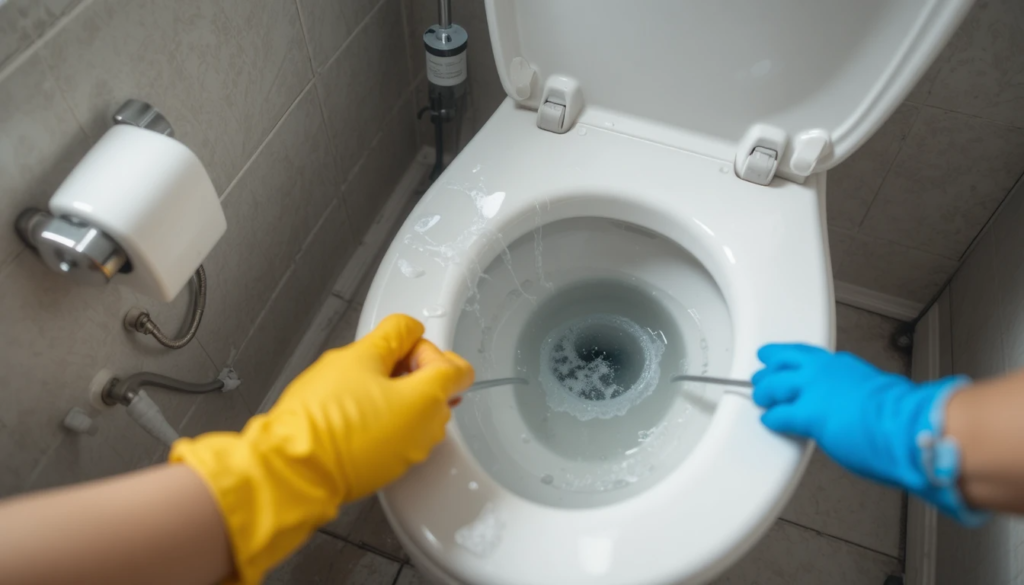
- Place a flange plunger firmly over the drain opening.
- Push down slowly to seal the opening.
- Pull up sharply, then push down again.
- Repeat 10–15 times.
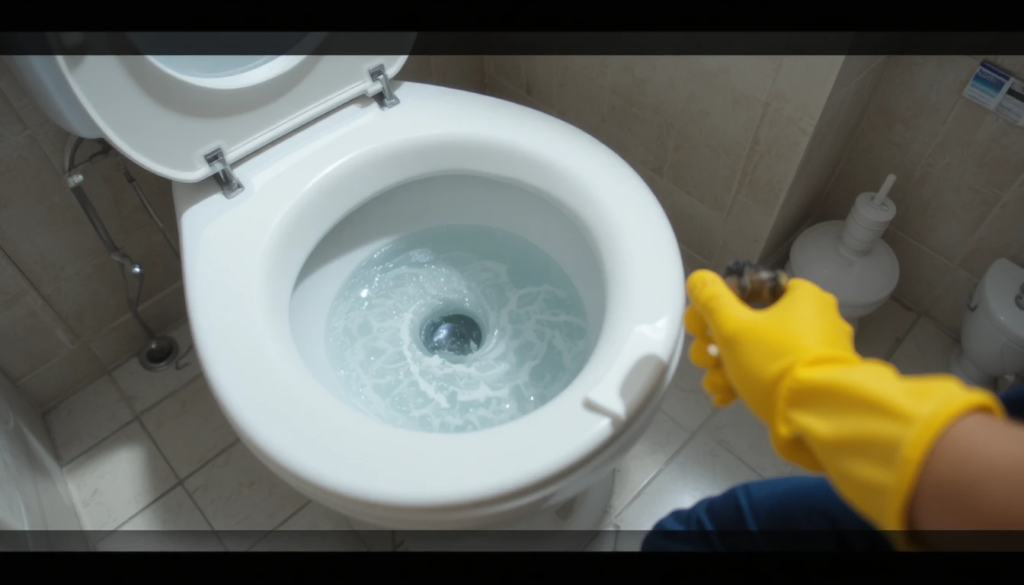
- Flush the toilet to test.
If plunging doesn’t work, use a toilet auger.
- Insert the auger into the drain.
- Turn the handle clockwise until you feel resistance.
- Push gently to break through the blockage.
- Pull the auger out and flush again.
Important warning:
Never use a regular drain snake — it can scratch porcelain.
2) Check the Water Level in the Tank
If the tank doesn’t hold enough water, the toilet won’t have the force needed for a strong flush. I’ve fixed dozens of toilets where the only issue was the water level set too low.
What the correct level should be
The water should sit about:
- 1 inch below the top of the overflow tube
- Or at the fill line mark inside the tank
How to adjust the water level
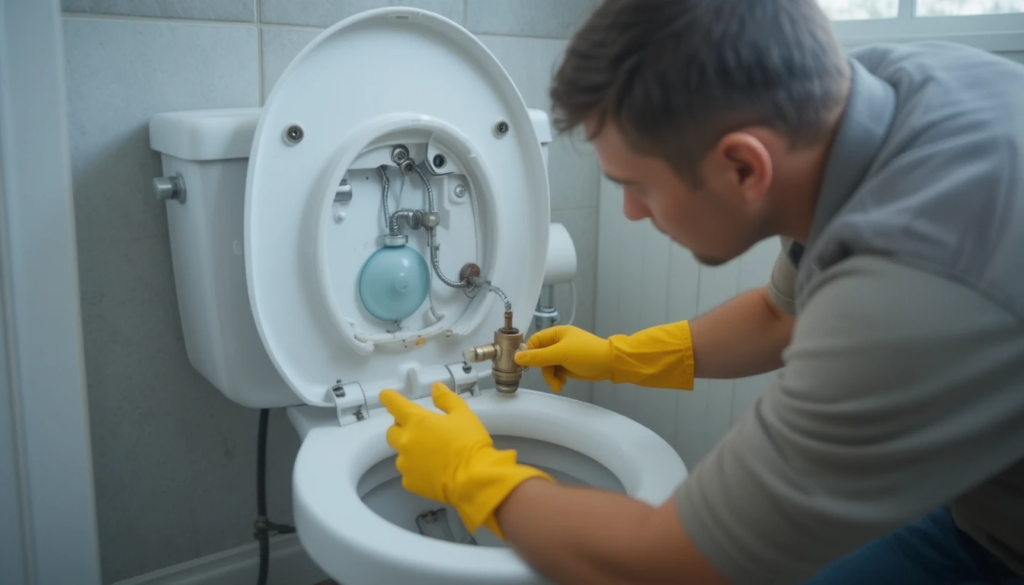
- Remove the toilet tank lid carefully.
- Locate the fill valve (usually on the left side).
- Find the adjustment screw or float clip.
- Turn the screw clockwise to raise the water level.
- Flush and recheck.
Tip from experience:
Even a half-inch difference can noticeably improve flushing power.
3) Clean the Rim Jets (Hidden but Critical)
Under the rim of your toilet bowl are small holes called rim jets. These direct water into the bowl during a flush. Over time, mineral deposits from hard water clog them.
After fixing this in multiple houses, I can tell you this problem is often overlooked — but it makes a huge difference.
How to check for blocked rim jets
Look for:
- Weak or uneven water flow
- Water trickling instead of spraying
- Visible white or green buildup
How to clean rim jets
- Pour 1–2 cups of white vinegar into the overflow tube inside the tank.
- Let it sit for 30–60 minutes.
- Use a toilet brush to scrub under the rim.
- Use a small screwdriver or wire to gently clear each hole.
- Flush the toilet.
Do not use metal tools aggressively — they can damage the porcelain glaze.
4) Inspect the Flapper Valve
The flapper controls how much water flows from the tank to the bowl. If it closes too soon, the flush will be weak.
I’ve seen this happen frequently with worn or misaligned flappers.
Signs of a flapper problem
- Handle must be held down to flush properly
- Toilet flushes weakly
- Flapper looks warped or stiff
- Tank empties too quickly
How to replace the flapper
- Turn off the water supply valve behind the toilet.
- Flush to empty the tank.
- Remove the old flapper from the mounting posts.
- Install the new flapper in the same position.
- Reconnect the chain with slight slack.
- Turn the water back on.
Total time: about 10 minutes.
5) Check the Lift Chain Length
A chain that’s too long or too short can prevent the flapper from opening fully.
Correct chain setup
- About 1/2 inch of slack
- No tangles
- Moves freely when the handle is pressed
Quick fix
- Remove excess links if the chain is too long.
- Reattach to the handle arm.
- Test the flush.
This adjustment costs nothing and takes less than two minutes.
6) Look for Low Water Pressure or Supply Problems
If multiple fixtures in your home have weak flow, the issue may not be the toilet.
Possible causes
- Partially closed shutoff valve
- Sediment buildup in supply line
- Municipal water pressure issue
- Faulty fill valve
What to check
- Ensure the shutoff valve is fully open.
- Flush other toilets or run faucets.
- Listen for slow tank refilling.
If pressure is consistently low throughout the home:
Call a plumber.
[VERIFY: Local plumbing codes may require licensed professionals for pressure regulator adjustments.]
7) When the Toilet Itself Is the Problem
Older toilets — especially models from the 1980s and early 1990s — were not designed for modern efficiency standards.
In many homes I’ve worked on, replacing an outdated toilet solved chronic flushing issues immediately.
Signs replacement may be necessary
- Toilet is over 25–30 years old
- Frequent clogs despite repairs
- Cracks in the bowl or tank
- Uses more than 3.5 gallons per flush
Modern toilets use:
- 1.28 gallons per flush
- Larger trapways
- Improved flushing design
Cost Estimate: DIY vs Professional Repair
| Repair Type | DIY Cost | Professional Cost |
|---|---|---|
| Plunging or minor clog removal | $10–$50 | $75–$150 |
| Replace flapper | $8–$20 | $100–$180 |
| Clean rim jets | $5–$15 | $120–$200 |
| Replace fill valve | $15–$40 | $150–$250 |
| Install new toilet | $150–$400 | $300–$800 |
Factors affecting cost:
- Region and labor rates
- Toilet brand and model
- Accessibility
- Severity of blockage
[VERIFY: check current US pricing]
When to Call a Plumber Immediately
Don’t wait if you notice:
- Water backing up into other drains
- Sewage smell from the toilet
- Repeated clogs within days
- Toilet overflowing frequently
- Cracks in the tank or bowl
These can indicate:
- Sewer line blockage
- Vent pipe problem
- Structural plumbing failure
Practical Summary: Fix These First
- Start with plunging — most weak flush problems are partial clogs
- Check the tank water level — it should be about 1 inch below the overflow tube
- Clean the rim jets — mineral buildup often restricts water flow
- Inspect the flapper and chain — worn parts reduce flushing power
- Replace very old toilets if problems keep coming back
Conclusion
Most weak flush problems come down to water flow — either not enough water, not enough pressure, or a blockage slowing things down. Start with the simplest fixes and work your way up. In my experience, homeowners solve this issue themselves about 80% of the time once they check the tank level and clear the rim jets.
If the toilet still struggles after those steps, don’t keep forcing it. Repeated flushing can stress the system and lead to leaks. At that point, a professional inspection can save you from bigger repairs later.
Frequently Asked Questions
Why does my toilet flush weakly but not clog?
This usually means the toilet isn’t releasing enough water during the flush. Common causes include a low tank water level, clogged rim jets, or a worn flapper. Check these components before assuming there’s a blockage.
How do I increase the flushing power of my toilet?
Increase the tank water level to the correct height, clean the rim jets, and ensure the flapper opens fully during the flush. These adjustments improve water flow and flushing force without replacing the toilet.
Why does my toilet need to be flushed twice?
A double flush often indicates a partial clog or insufficient water volume. The first flush moves some waste, but not enough to clear the trapway. Plunging the toilet or adjusting the tank water level usually fixes the issue.
Can hard water make a toilet flush poorly?
Yes. Mineral deposits from hard water can clog rim jets and internal passages, reducing water flow. Cleaning the system with vinegar or a descaling solution restores normal flushing performance.
Is it safe to use chemical drain cleaners in a toilet?
No. Most chemical cleaners can damage toilet components and create hazardous fumes. Use a plunger or toilet auger instead — these are safer and more effective.
Why is my toilet slow to refill after flushing?
A slow refill typically means a partially closed shutoff valve, clogged supply line, or failing fill valve. Inspect the valve first, then consider replacing the fill valve if the problem continues.